
Photochromic sunglasses and transition lenses: a UK guide
You leave home under cloud, turn a corner into sunshine, then follow a shaded path through the park. In the UK, choosing sunglasses is often less about the season and more about the changes of light within a single outing.
If you are searching for photochromic sunglasses or transition lenses, the feature you are looking for is an adapting tint: lenses that gradually darken with UV exposure and become lighter as exposure decreases, instead of staying equally dark throughout your day.
Photochromic is the general technology category. People sometimes use transition lens as an informal description of a tint-changing lens, but Transitions® is a specific brand. The Missandtrendy products featured here are photochromic lenses, not claimed to be Transitions® branded lenses.
What does photochromic mean?
In everyday terms, photochromic means light-responsive colour change. Photochromic lenses contain light-sensitive materials that react to UV exposure, making the lenses darken outdoors. When UV exposure decreases, the lenses gradually become lighter again. You do not need to operate a switch to activate that change.
For UK shoppers, the attraction of photochromic sunglasses is flexibility. Instead of a fixed dark tint for every part of a walk, you have light-adaptive lenses that respond as UV exposure changes. That can make an outing between an open high street and sheltered paths more convenient, with less need to swap between separate pairs of tinted eyewear.
What is a transition lens?
When shoppers ask for a transition lens, they are often looking for a lens that changes from a lighter tint towards a darker tint and back again. That changing-tint function is photochromic technology. The change is gradual rather than instantaneous, and the lighter state may retain a grey tint rather than becoming colourless.
Why consider transition lenses? The practical appeal is not having the same fixed dark tint for every part of your outing. A photochromic lens can adjust as UV exposure changes, offering a flexible alternative for British days spent moving between different outdoor light conditions. Give it time to respond, particularly after moving suddenly into shade.
When comparing products described as transition lenses, check the actual lens specification, starting tint and brand rather than assuming they all perform identically. Changing tint is not itself a separate type of UV protection.
Why buy photochromic sunglasses for changing UK light?
The practical reason is convenience: an adapting tint in a frame that suits your routine. You can choose a defined aviator for town, a folding design for a day bag, fit-over sunglasses for suitable everyday glasses or a lightweight sports frame for daytime activity.
These styles also list polarised UV 400 lenses. Photochromic describes the changing tint, polarisation helps reduce reflected glare, and UV protection concerns ultraviolet exposure. They do different jobs, so check all three features in the lens option you select rather than judging protection by lens darkness.
Photochromic sunglasses are worth considering if you prefer an adapting lens to a permanently dark pair. They are not a promise of perfect tint at every moment, and the lenses need time to adjust. Where fixed-tint alternatives are offered, select the photochromic option for the changing-tint effect.
If you are comparing polarised photochromic sunglasses, look for both features in the selected lens description. UV 400 photochromic sunglasses should also state their ultraviolet protection separately from the changing tint.
Dire: photochromic aviator sunglasses for everyday UK outings


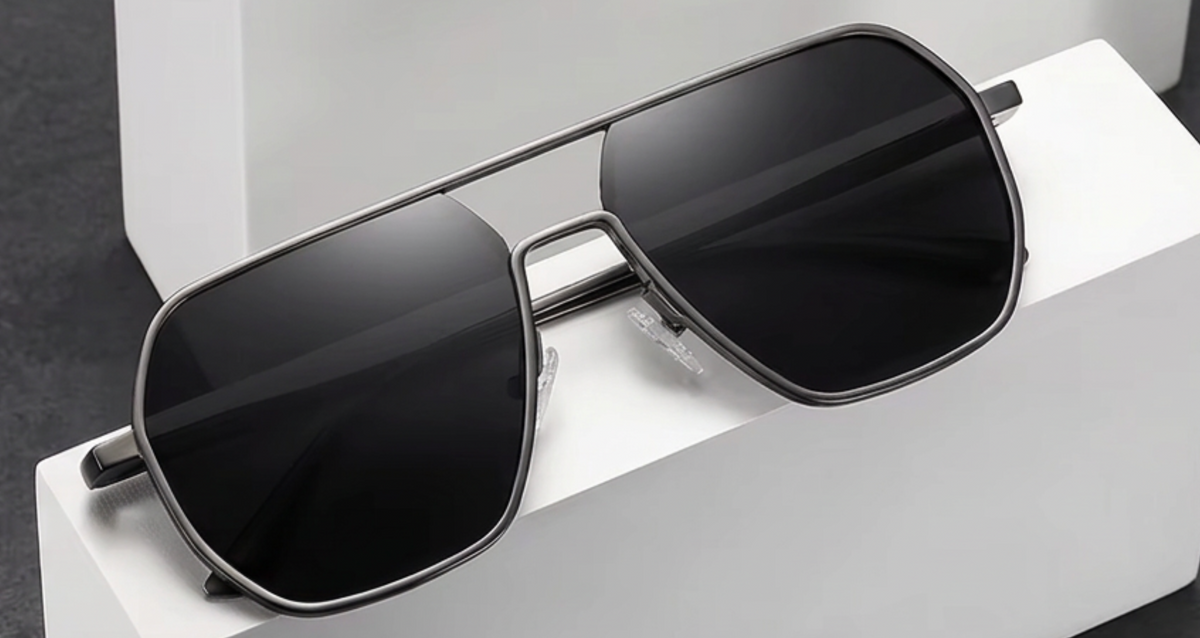
Dire brings a structured alternative to the traditional teardrop aviator: squared lenses, a slim metal frame and a distinctive double bridge. Its 30g design suits a style-led approach to everyday eyewear, from a high-street coffee stop to a weekend exploring a British seaside town.
Choose the photochromic version for lenses that move from light grey towards a darker tint in response to UV exposure. The practical advantage is an adapting lens paired with a frame that works just as naturally with autumn knitwear as a summer shirt. The separately offered fixed black lenses do not change tint.
For a UK routine that mixes open streets, sheltered squares and indoor stops, Dire offers changing tint without abandoning a defined aviator look. Compare the frame measurements with a pair you already wear comfortably.
Folding photochromic sunglasses: an aviator you can pack away


Model image shows the fixed black-lens option to illustrate the frame on the face. Select the photochromic lens option for the changing tint described here.
A classic teardrop silhouette meets a folding metal frame in this 30g design. Its distinctive advantage is what happens when you take it off: the frame folds down for more compact storage, a useful detail for a small day bag on a rail trip or a weekend away in the UK.
With the photochromic lens option selected, the tint darkens with UV exposure and becomes lighter as exposure falls. That pairs practical portability with an adapting lens for a day that moves between an open promenade, sheltered streets and a café stop.
This is the option to consider if you like the traditional aviator shape but do not want a full-size frame taking up space whenever you put it away. Check your selected lens carefully: this product also lists fixed-tint alternatives, which should not be confused with the photochromic version.
Photochromic fit-over sunglasses: keep your everyday glasses in place


For glasses wearers, the question is different: how do you add an adapting sunglass lens without replacing the prescription glasses you already use? This flip-up fit-over design is intended to sit over regular eyewear, bringing a practical alternative to choosing another prescription frame.
The photochromic lenses adjust their tint with sunlight exposure, while the flip-up format adds another element of convenience. At 25.5g, the polycarbonate design keeps the additional frame lightweight, although the fit must still be checked against your own glasses.
Think of a regular walk to the shops, a bright spell during an autumn park visit or time spent outdoors on a British spring afternoon. The appeal is keeping familiar eyewear underneath while the outer lenses adapt. Fit-over does not mean universal fit, so compare the shape and clearance before choosing.
Thunder: photochromic sports sunglasses for an active British day


Thunder takes the collection in a sportier direction. Its 24g polycarbonate frame and photochromic HD TAC lenses are designed for cycling and outdoor activities, making it a distinct choice from the metal aviators.
If you are choosing photochromic cycling sunglasses for UK daytime rides, consider how your route moves between open stretches and tree-lined sections. Thunder's photochromic tint responds to changing UV exposure, while its polarised lenses help reduce reflected glare. The advantage is an adapting tint in a lightweight sports design, rather than carrying separate fixed-tint pairs for different parts of an outing.
Plan around the limits as well as the benefits: the tint is not instantaneous, and an abrupt move into deep shade still calls for care. Choose suitable conditions for your activity and do not treat changing tint as a substitute for clear visibility.
Why consider photochromic sunglasses across the UK seasons?
Spring: a walk can move between exposed paths and sheltered greenery. An adapting tint offers flexibility for outings where light conditions vary.
Summer: outdoor plans often include both open sunshine and shaded stops. Photochromic lenses offer an alternative to remaining behind the same fixed dark tint throughout.
Autumn: a town-centre errand or park walk can combine bright spells with shaded streets. Choose for the actual light and your comfort, not simply the date on the calendar.
Winter: a bright daytime outing may still call for sunglasses, but short days, dusk and poor visibility are different situations. All-season usefulness means having an option for suitable daylight conditions throughout the year, not wearing tinted lenses in every kind of weather.
Transition lenses for driving: what UK motorists should check
If you are considering transition lenses for driving, check the exact product rather than assuming every adapting lens will darken inside a car. Standard UV-activated photochromic lenses may not darken effectively behind a windscreen because the glass filters the UV light that activates them. Do not assume that the change you see outdoors will be repeated inside your car. Check the guidance for the exact lens and its driving suitability. Tinted lenses should not be worn for night driving or in poor visibility.
Photochromic and transition lenses: UK shoppers' questions
Are photochromic lenses the same as transition lenses?
People sometimes use the phrase transition lenses when describing lenses that change tint. Photochromic is the general lens category; Transitions® is a particular brand. Missandtrendy's products in this guide are described as photochromic, not as Transitions® branded lenses.
Does a transition lens become completely clear?
Do not assume a transition lens becomes colourless. The lighter state of the styles in this guide may retain a grey tint. Clear-to-dark sunglasses is a useful description to explore, but check the selected product and lens option rather than assuming colourless indoor lenses.
What should I look for in light-adaptive sunglasses?
Look at the starting tint, stated UV protection, frame fit and intended use. Light-adaptive sunglasses should suit your routine as well as your preferred style. For UK days spent outdoors, compare how you will use them rather than looking for a single pair promised to suit every condition.
Photochromic vs polarised lenses: what is the difference?
Photochromic describes a tint that changes with UV exposure. Polarised describes a filter that helps reduce reflected glare. They are different features, and a lens can offer both, as listed for the photochromic options featured here.
Choose around your British everyday
Choose Dire for a squared aviator look, the folding aviator for compact storage, the fit-over design for wearing over suitable everyday glasses, or Thunder for a lightweight sports option. Whether your search began with photochromic sunglasses or transition lenses, the shared attraction is an adapting tint; the right style depends on how you spend your time.
For UK life, that is the real appeal of photochromic sunglasses: not a promise to make every day sunny, but a practical way to approach the changing light we actually live with.
The product images showing lighter and darker tints are illustrations. They are not a guarantee of an exact tint or adjustment time in your own conditions.